ServicesRoot Canals
Root Canals in Trophy Club
A root canal removes infected or dying nerve tissue from inside a tooth, then seals it so the tooth can stay. We tell you plainly if your tooth is worth saving, what the work involves and what it will cost before we start.
What a Root Canal Fixes
The center of each tooth holds living tissue called the pulp, which carries the nerve and blood vessels. Bacteria can get in through deep decay, a crack, or a filling that has worn or leaked. Once that happens, the pulp swells or becomes infected, and it can't heal by itself. Without treatment, infection can travel past the root tip into the jawbone and form an abscess.
During a root canal we take out the damaged pulp, clean the inside of the roots and seal them. After that, most teeth need a crown. Without its pulp, a tooth slowly becomes more brittle and easier to break.
Saving the tooth isn't always the best move. A crack that runs under the gum, or too little sound tooth left to work with, can make a root canal a poor bet. We'll tell you if that's the case. Taking the tooth out, often followed by dental implants, may serve you better. We lay out the choices and why, and the decision is yours.
What Your Root Canal Includes
- A full look at the tooth
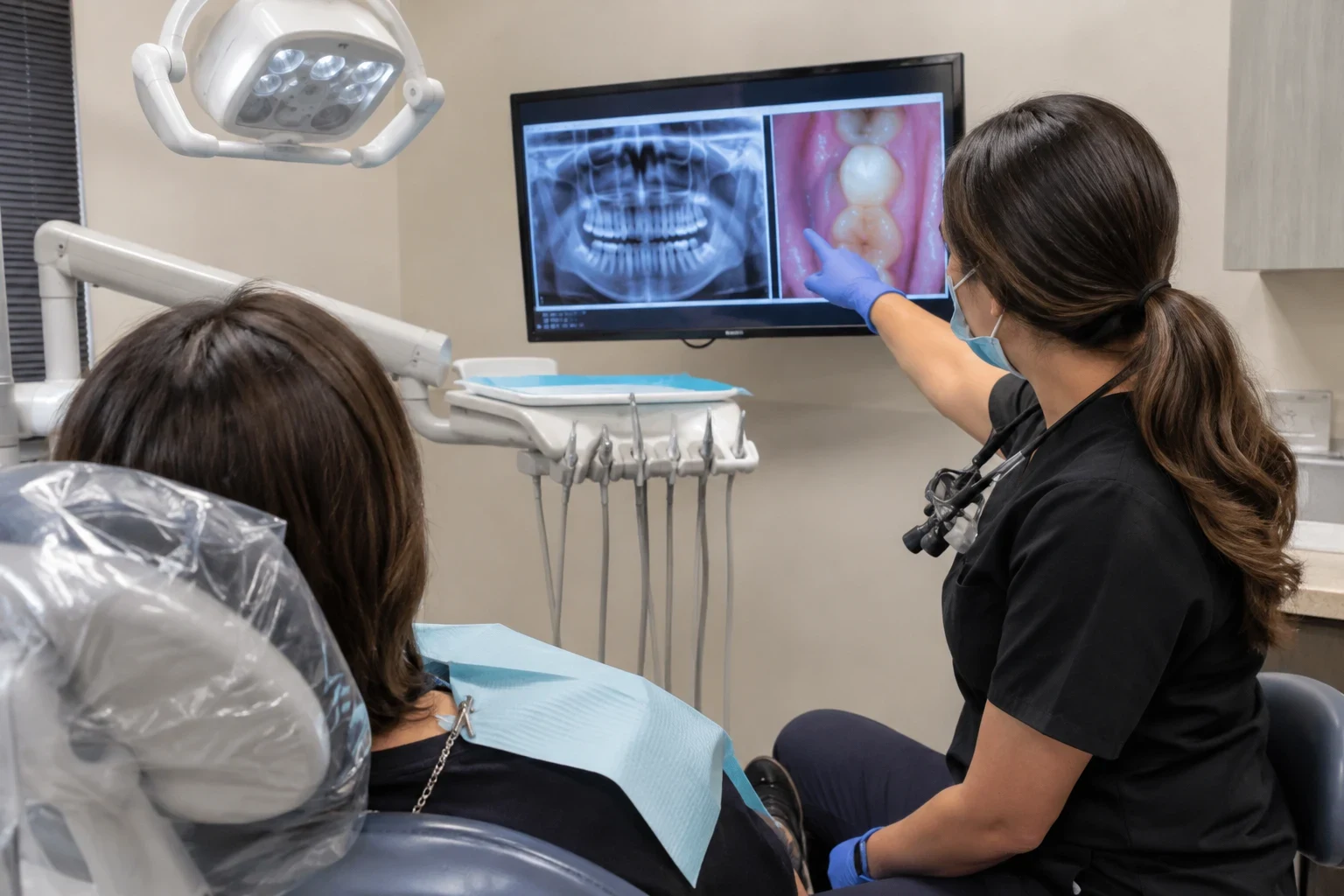
- We check how the tooth reacts to cold and to tapping, then take digital X-rays of the roots and surrounding bone. If a flat X-ray doesn't show the roots clearly, we add a CBCT scan.
- Getting you numb
- Both the tooth and the gum next to it get numbed, and we test it before starting. Feel anything during the work? Let us know. We pause and give you more.
- Clearing out the canals
- The infected tissue comes out and each canal is cleaned all the way to the end of the root. A front tooth typically has one canal. A molar may have three or four.
- Closing it up
- We pack the cleaned canals with a soft, rubbery filling material and seal them to keep bacteria out. A temporary filling covers the opening until your final restoration.
- A plan for the crown
- Back teeth do most of the chewing, so they usually need a crown on top. We'll tell you whether yours does and the reason.
Signs You May Need a Root Canal
Sensitivity that won't fade
A brief twinge from something cold is normal. If the ache from hot coffee or ice water sticks around for a minute or longer, the nerve is likely irritated.
Pain that keeps you up at night
A deep, pounding ache that gets worse when you lie down usually means pressure is building inside the tooth.
Hurts to chew on one side
Tenderness when you bite on one tooth can mean infection has reached the bone around the root.
A bump on your gum
A small blister near the tooth that oozes or leaves a bad taste is often an abscess draining. Even if the pain goes away, it still needs care.
A tooth that looks darker
A tooth that turns gray, whether after an injury or slowly over time, can have a nerve that is dying inside. This sometimes happens with no pain.
Puffiness in the gum or cheek
Swelling is a sign the infection is spreading. Have it checked soon.
What Moves the Cost of a Root Canal
Two things drive most of the price: which tooth is being treated and what goes on top of it afterward. Before any work starts, you get a written treatment plan that lists each item. We are in-network with 15+ major PPO dental insurance plans. You can also spread the cost out with 0% interest financing for up to 24 months, and checking whether you preapprove does not affect your credit score.
Front tooth or molar
Front teeth usually have a single canal and go faster. Molars can have three or four canals, so they take more time and cost more.
What covers the tooth
The crown is billed apart from the root canal. Most back teeth need one. Many front teeth can be closed with a filling instead.
Redoing an old root canal
If a past root canal has failed, the old filling material has to come out first. That extra work makes retreatment cost more than a first-time treatment.
Hard-to-reach canals
Roots that bend sharply or have narrowed with age take longer to clean. Some need a CBCT scan so we can map them before we start.
Insurance or membership
Many PPO plans pick up part of the bill for a root canal. No insurance? Our in-house Membership Plan for uninsured patients can bring your share down.
How Treatment Works
- 1
Find the cause
We start with an exam and X-rays to confirm the nerve is the problem and the tooth can be saved. You hear what we found in plain words.
- 2
Numb and protect
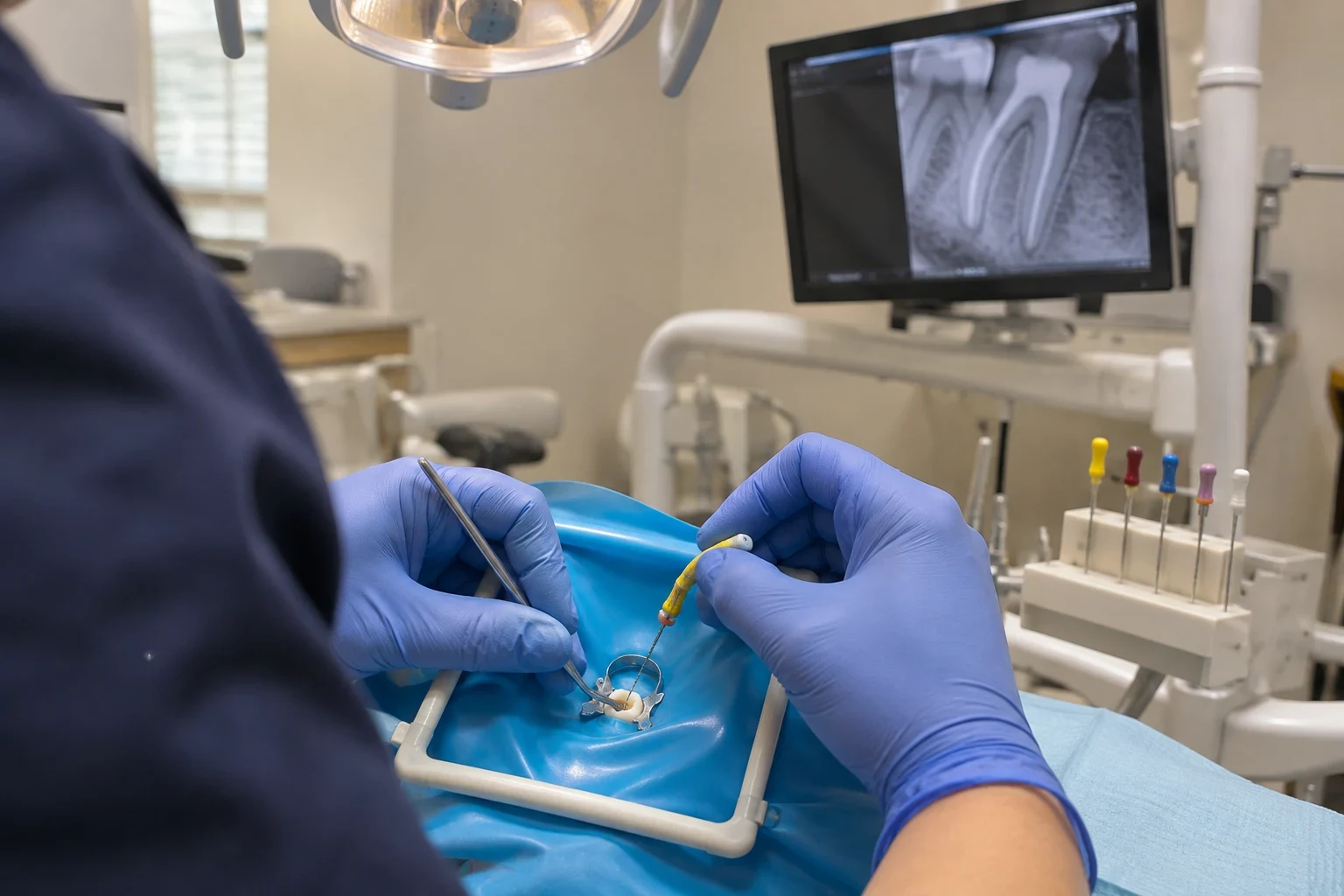
We numb the area and place a small rubber sheet around the tooth to keep it clean and dry while we work.
- 3
Clean and fill the canals
We open the top of the tooth, remove the pulp, clean the canals and seal them. Most root canals take one visit; an infected or complex tooth may take two.
- 4
Restore the tooth
A temporary filling goes in first. At a follow-up visit we place the permanent filling or crown so you can chew on the tooth normally again.
Root Canal Questions
Does a root canal hurt?
With the tooth fully numb, most patients say it feels about the same as having a cavity filled. Expect some tenderness for a few days after. Over-the-counter pain relievers are usually enough. For most people, the toothache that sent them to us was the worst part.
How long is the appointment?
Plan on roughly an hour to an hour and a half for most teeth. A molar or a badly infected tooth may run longer or need a second visit. Your crown goes on at a separate appointment once the tooth has settled.
Will my tooth need a crown?
If it is a back tooth, the answer is nearly always yes. Molars and premolars take a lot of chewing force, and a treated tooth without a crown can split. When a split runs below the gum, the tooth usually has to come out. Front teeth can often get by with a filling.
Wouldn't it be cheaper to pull the tooth?
On the day, yes. Over time, an empty space lets the teeth next to it drift and the bone underneath shrink. Filling that gap later with dental implants or a bridge often runs more than saving the tooth would have. If your tooth can't be saved, we will say so and go over extraction and replacement with you.
Can I put it off for a while?
An infected nerve won't recover by itself. Sometimes the pain fades because the nerve has died, but the infection is still there and can move into the jawbone. The longer it sits, the more likely a tooth we could have saved ends up needing to come out.
Find Out If Your Tooth Can Be Saved
Patients from Trophy Club, Roanoke and Keller come to us with tooth pain and leave with a clear answer and a plan. Call and we will set up a visit to look at the tooth.