ServicesExtractions
Tooth Extractions in Trophy Club
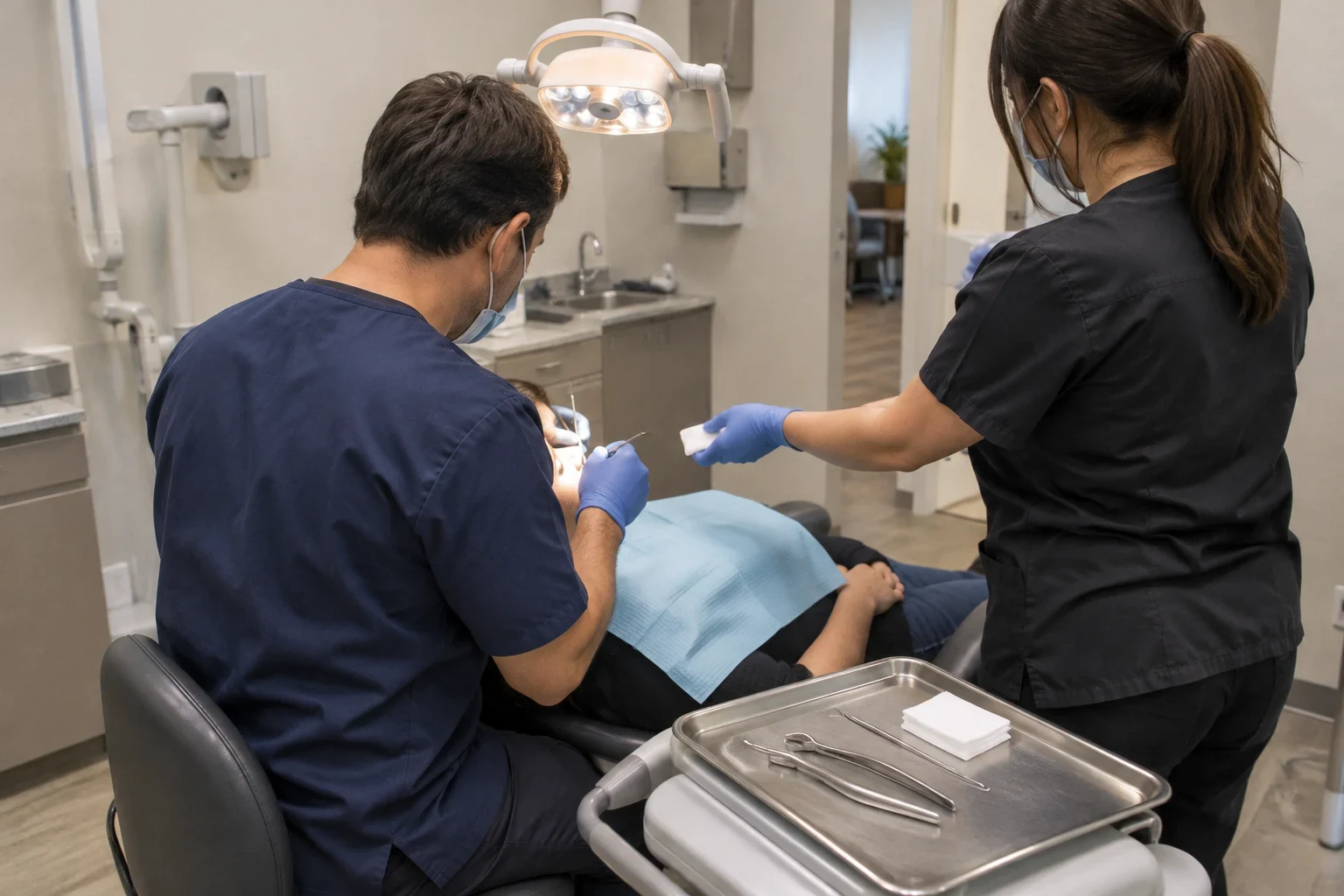
Some teeth can be saved. Some can't. We look at the tooth, show you the X-ray, and tell you plainly which one you have. If it needs to come out, we numb it well, take it out gently, and talk through how to fill the space.
When Removing a Tooth Makes Sense
If a tooth can be repaired, we repair it. Extraction is for damage that can't be fixed: a split that runs down into the root, decay that has hollowed out too much tooth, a tooth gone loose from advanced gum disease, or an infection that won't stay away.
When saving the tooth is a real option, you'll hear that from us first. Usually that means a root canal and a crown, which our Root Canals page explains. And if saving it would cost more than it's worth, or it's likely to fail in a few years, we'll be just as honest about that.
Pulling the tooth is only part of the job. Before we start, we talk about what will fill the space: dental implants, a bridge or dentures. The way a tooth is removed can help or hurt those choices, so we plan the two together.
What Comes With Your Extraction
Exam and digital X-rays
We look at the tooth, its roots and the bone that holds it. If the roots curve or sit close to a nerve or the sinus, a CBCT scan shows us a 3D picture before we begin.
A plain reason
We put the images on the screen and walk you through them. You'll hear why the tooth should come out, or why it may not have to.
Full numbing
We use local anesthetic and give it time to take hold. Pressure is normal. Sharp pain is not, so if you feel it, say so and we pause.
Simple or surgical removal
A tooth you can see above the gum can usually be eased loose and taken out. A broken or buried one may need a small opening in the gum or removal in sections, which spares more bone.
Clear take-home instructions
We send you out with gauze, printed care steps and a simple picture of what healing should look like day by day for the first week.
Next steps for the space
We cover your replacement choices and when each one can happen, so you know what's ahead.
Signs a Tooth Might Not Be Savable
A split that reaches the root
When a crack runs down into the root, it usually can't be sealed. You may feel a sharp twinge biting on one spot, and it comes and goes.
A loose tooth
A tooth that wiggles often means gum disease has worn away the bone around it. Past a point, it won't tighten back up.
A swollen gum or a bump near the tooth
Both are signs of infection at the root. A root canal can sometimes clear it. When too little tooth is left, taking it out is what ends the infection.
Decay that has crumbled the tooth
Once there isn't enough healthy structure to hold a filling or crown, there's nothing firm left to rebuild on.
An old root canal or crown that still hurts
A treated tooth that keeps bothering you may be worn out. We look first at whether redoing the root canal is worth it.
What Happens at Your Extraction Visit
- 1
Review and agree on the plan
We go over your X-rays, health history and medicines, with extra attention to blood thinners. Then we confirm the plan with you before anything starts.
- 2
Get you numb
A numbing gel goes on first, then the anesthetic. We check the area and wait until it has fully taken effect.
- 3
Take the tooth out
We loosen the tooth slowly in its socket until it releases. Once you're numb, a simple case often takes only a few minutes.
- 4
Help the socket start healing
Gauze goes in to help a clot form. If stitches are needed we place them, and many of them dissolve without a return trip.
- 5
Rest and recover
Most patients can drive themselves afterward and are back to their usual routine in a day or two. We'll let you know if a follow-up visit is needed.
What Changes the Price of Removing a Tooth
You hear the cost from us before any work starts. Most of the price comes down to how hard the tooth is to get out and what else that visit has to cover. These are the things that move it most.
- Simple or surgical
- A tooth that comes out in one piece is the lower-cost case. One that has broken off at the gum line or has to be removed in sections takes more chair time and costs more.
- How many teeth
- Taking out two or three teeth in one sitting usually works out better than booking a separate visit for each one.
- Imaging
- Regular digital X-rays cover most cases. We add a CBCT scan only when the roots sit close to a nerve or the sinus.
- Insurance or membership
- We're in-network with more than 15 major PPO dental plans. No coverage? Our in-house membership plan is built for uninsured patients and can lower what you pay.
- Planning for a replacement
- When dental implants are the goal, some prep work may happen during the extraction visit, and we explain that before we start. To spread out the cost, you can pay over as long as 24 months with no interest, and seeing whether you're preapproved won't touch your credit score.
Common Questions About Tooth Removal
Something not covered here? (817) 518-5953
Will I feel pain while the tooth comes out?
You shouldn't, because the area is fully numb first. You'll notice pressure and some pushing. For a few days after, the spot will be sore, and most people handle that with over-the-counter pain relievers.
How long until it heals?
The gum usually closes in one to two weeks. The bone below keeps rebuilding for a few months after that. Most people feel back to normal within a few days.
What is dry socket, and how do I prevent it?
Dry socket is when the blood clot slips out of the socket and the bone is left bare. It shows up as a deep, throbbing ache a few days later. For the first several days, don't use straws, don't smoke and don't spit hard. If the pain is getting worse instead of easing, call us.
Do I have to replace the tooth?
Not in every case. When a back molar is gone, the neighboring teeth can drift and tip, and the bone in that spot slowly shrinks. We'll give you an honest read on whether a replacement matters for your bite, and if it does, whether dental implants, a bridge or dentures make the most sense.
Can an implant go in the same day the tooth comes out?
Sometimes. It depends on infection, how much bone is there and where the tooth sits. In many cases the site does better if it heals first. We'll check your scan and tell you plainly.
Is wisdom tooth removal any different?
It is a kind of extraction, but wisdom teeth are often stuck in the bone or partly covered by gum, so the steps change. Our Wisdom Teeth Removal page covers those details.
Find Out if the Tooth Can Be Saved
Bring us the tooth that's bothering you. Our $25 Focused Evaluation includes a comprehensive exam, digital X-rays, CBCT scan if needed, treatment planning and consultation, so you'll know your options before anything comes out.