
ServicesDental Implants
Dental Implants in Trophy Club
When a tooth is gone or can't be saved, an implant gives you a new root and a new tooth. We set a titanium post in the jawbone, give it time to fuse, then top it with a crown you can chew on. You get a plain answer on fit and the cost in writing.
How Implants Work and Who They Suit
Think of it as a tooth built in layers. A titanium post sits in the jawbone. A small connector, the abutment, attaches to it. The crown you see goes on last. During healing, bone grows snug around the post, and that bond is why it can take a full bite without wiggling.
Most of the time it's the best fit when a tooth is already missing, or when one is too far gone to keep. A bridge needs the healthy teeth on both sides ground down. A partial denture sits on the gums and can move around. An implant needs no help from its neighbors, and it helps stop the bone in that spot from wasting away.
Some people need to wait or choose something else. Untreated gum disease, heavy smoking or poorly controlled blood sugar can get in the way of healing. If any of that is true for you, we tell you up front and talk through what to treat first or which option makes more sense.
What Implant Treatment Includes
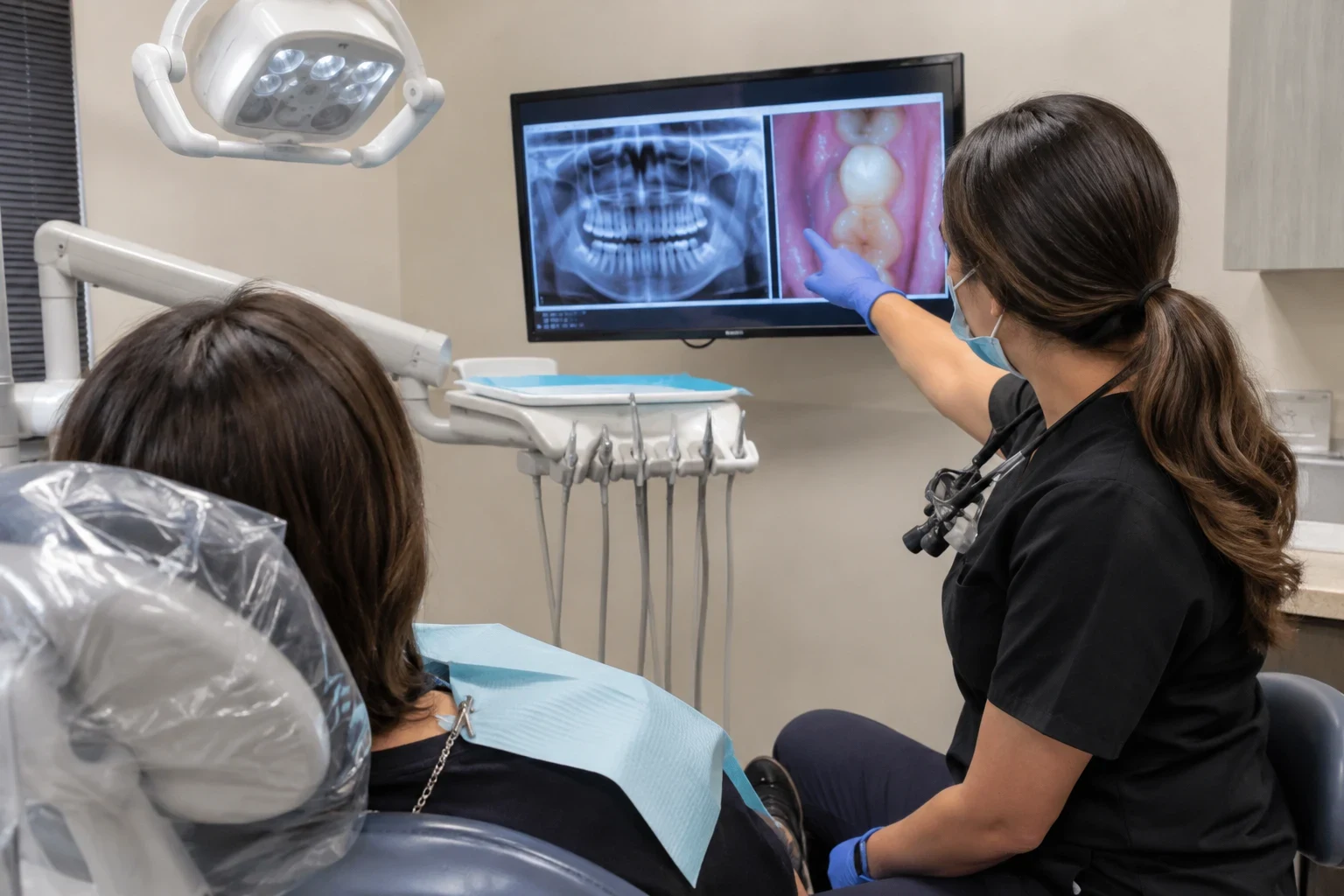
3D scan and planning
A CBCT scan shows bone height, width and where the nerves and sinuses sit. We plan the post's position from that scan, not from guesswork.
Removing the old tooth
If a broken or infected tooth is still there, we take it out gently. Sometimes the post can go in the same visit. Other times the site needs to heal first.
Bone grafting when needed
When the bone is too thin to hold a post, we add graft material to build it back up. Not every patient needs this, and the scan tells us before we start.
Placing the post
The post goes in with local numbing. Most patients say it feels like pressure, and it is often easier than they expected.
Abutment and crown
Once the bone has healed, we attach the abutment and a crown shaded to match the teeth beside it.
Options for several teeth
Two implants can hold a bridge, and four or more can hold a full arch. If you wear dentures now, implants can lock them in place so they stop slipping.
Signs an Implant May Be Your Next Step
- A gap you chew around
- If you've been favoring one side for months, the teeth on the other side are taking the extra load. Neighboring teeth can also start tipping into the gap.
- A tooth that can't be saved
- A crack below the gum line or a tooth that has failed after a root canal often has to come out. Planning the replacement before it comes out saves time.
- A loose bridge or partial
- Old bridges fail when the anchor teeth decay. Partials can rub sore spots into the gums. Either one is a good time to ask about implants.
- Dentures that won't stay put
- If you're using more adhesive every month, the bone under the denture is likely shrinking. Implants give the denture something solid to grip.
- A sunken look around the mouth
- Bone that has gone without a tooth for years slowly shrinks. That can make the cheeks or lips look hollow and can make an implant harder to place later.
How the Process Goes
- 1
Evaluation and scan
We do an exam, digital X-rays and a CBCT scan if needed. Then we sit down with you and go over the plan, the timeline and the cost in writing.
- 2
Placement visit
We numb the area and place the post. You go home with care instructions and a soft-food list for the first few days. Most people are back at work the next day.
- 3
Healing time
The bone needs a few months to bond to the post. If the tooth shows when you smile, we can fit a temporary so you aren't walking around with a gap.
- 4
Crown and final fit
We take impressions or a digital scan, attach the abutment and seat the final crown. We check your bite so it hits evenly with the rest of your teeth.
What Moves the Cost
No two mouths need the same work, so we price your implant after we see the scan, not before. The written treatment plan lists every step and what each one costs. You can spread payments over as long as 24 months at 0% interest, and seeing if you preapprove won't affect your credit score.
- How many teeth
- A single post with one crown is the most direct case. A bridge or a full arch takes more posts and more lab work.
- Bone condition
- Thin bone may need a graft before or during placement. Bone close to the upper sinus sometimes needs a sinus lift, which adds a step.
- A tooth still in place
- When a failing tooth hasn't come out yet, taking it out and getting the site ready is part of the plan and part of the price.
- What goes on top
- A single crown, a fixed bridge and a denture held by implants are each built differently and priced differently. We go over each option that suits your case.
- Insurance or membership
- We're in-network with 15+ major PPO dental insurance plans, and many of them help with the crown or the extraction. Patients without insurance can join our in-house Membership Plan.
Dental Implant Questions
- Does getting an implant hurt?
- The area is fully numbed, so you feel pressure, not pain, during placement. Afterward most people have soreness for a few days that over-the-counter pain relievers handle. Swelling usually peaks around day two or three, then fades.
- How long does the whole thing take?
- From placement to final crown is usually three to six months, mostly healing time. Adding a bone graft can stretch that out. You'll have a timeline in your treatment plan before we start.
- How long do implants last?
- The post itself can last decades with good care. The crown on top wears like any crown and may need replacing someday. Brushing, flossing around the implant and regular cleanings matter just as much as with natural teeth.
- Will my PPO insurance pay for it?
- It depends on your plan. Some PPO plans pay toward the crown, the extraction or the implant itself, and some don't cover the post at all. We check your benefits and show you what's covered and what's left before you decide.
- Am I too old for an implant?
- Age by itself isn't the issue. Bone health, gum health and general health are what count. Many patients in their 70s and 80s do well with implants, especially for holding dentures in place.
Find Out If an Implant Fits Your Case
Start with a focused evaluation. We'll do the exam, X-rays and a CBCT scan if needed, then tell you straight what we see and what your options cost.