ServicesDentures
Dentures in Trophy Club
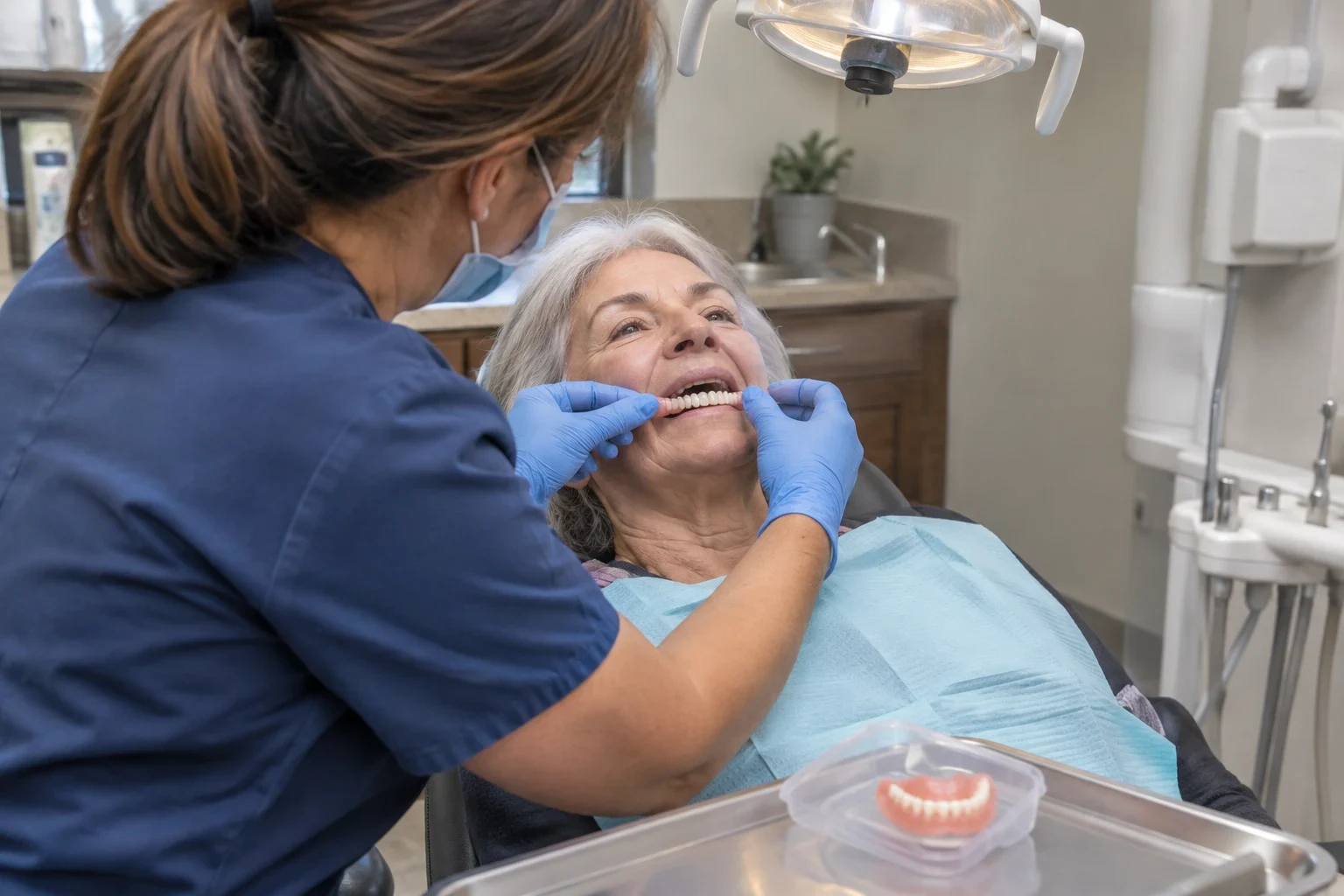
Missing several teeth, or all of them, makes eating and smiling hard. We make full and partial dentures, plus dentures that snap onto dental implants. We look at your mouth, tell you what each option does well, and give you a clear treatment plan.
What dentures do, and when they make sense
A denture is a set of replacement teeth on a gum-colored base. A full denture replaces every tooth on the upper or lower arch. A partial fills gaps and clips onto the teeth you still have.
Dentures are often the right call when many teeth are failing at once, when the bone or budget isn't ready for implants, or when you want teeth back sooner. They are not perfect. A lower denture held only by suction can move when you chew. That is why we also talk about snap-in dentures held by two or more dental implants.
You get the facts on each option, including the tradeoffs, and you decide. Nobody here will push you toward the most expensive choice.
What our denture work includes
- Exam and X-rays first
- We check your gums, the teeth you have left and the bone underneath. That tells us which denture will sit well and whether any teeth need to come out first.
- Full dentures
- A complete upper or lower set. The upper usually holds well by suction against the palate. The lower has less to grip, so we set expectations honestly.
- Partial dentures
- A removable plate that fills gaps between healthy teeth. It keeps your other teeth from drifting and makes chewing easier on both sides.
- Snap-in dentures on implants
- Dental implants placed in the jaw give the denture something solid to click onto. Most patients find it chews better and stops slipping. It also helps slow the bone loss that follows lost teeth.
- Immediate dentures
- If teeth need to come out, we can make a denture ahead of time so you are not without teeth while you heal. It will need adjusting as the gums shrink.
- Adjustments and relines
- Gums and bone change over time. We smooth sore spots and reline the base so it fits snug again.
Signs it may be time for dentures
Several loose or broken teeth
When many teeth are failing at once, fixing each one can cost more than replacing them. We'll tell you which route makes more sense.
Chewing only on one side
Gaps make you favor one side and skip foods you like. A partial or full denture spreads the load again.
Your current denture slips or hurts
Old dentures loosen as the jaw shrinks. Rubbing sores, clicking or heavy use of adhesive mean the fit is off.
Gaps you hide when you smile
Missing front teeth change how you talk and laugh. Replacing them fixes the look and helps your lips and cheeks sit right.
Advanced gum disease
When gums and bone can't hold teeth anymore, a denture or implant-supported option may be the cleaner fresh start.
What moves the cost of dentures
Dentures don't have one set price, because every mouth starts in a different place. These are the things that change the number. We walk you through each one before any work begins, and we take more than 15 major PPO dental insurance plans in network.
Full, partial or snap-in
A partial for a few gaps costs less than a full arch. Adding dental implants to hold the denture raises the cost, but it changes how well the denture stays put when you eat.
Work needed first
Extractions, treating infection or smoothing the bone add to the plan. We list them at the start so nothing new appears halfway through.
Materials and teeth
Denture bases and teeth come in different grades. Better materials look more natural and wear more slowly.
Immediate versus conventional
With an immediate denture you're never without teeth, but it usually needs a reline once the gums settle, and that is part of the cost.
Insurance and payment
You can spread the cost over as long as 24 months at 0% interest. Seeing whether you're preapproved won't touch your credit score. If you have no dental insurance, ask us about our In-house Membership Plan.
How getting dentures works
- 1
First visit and plan
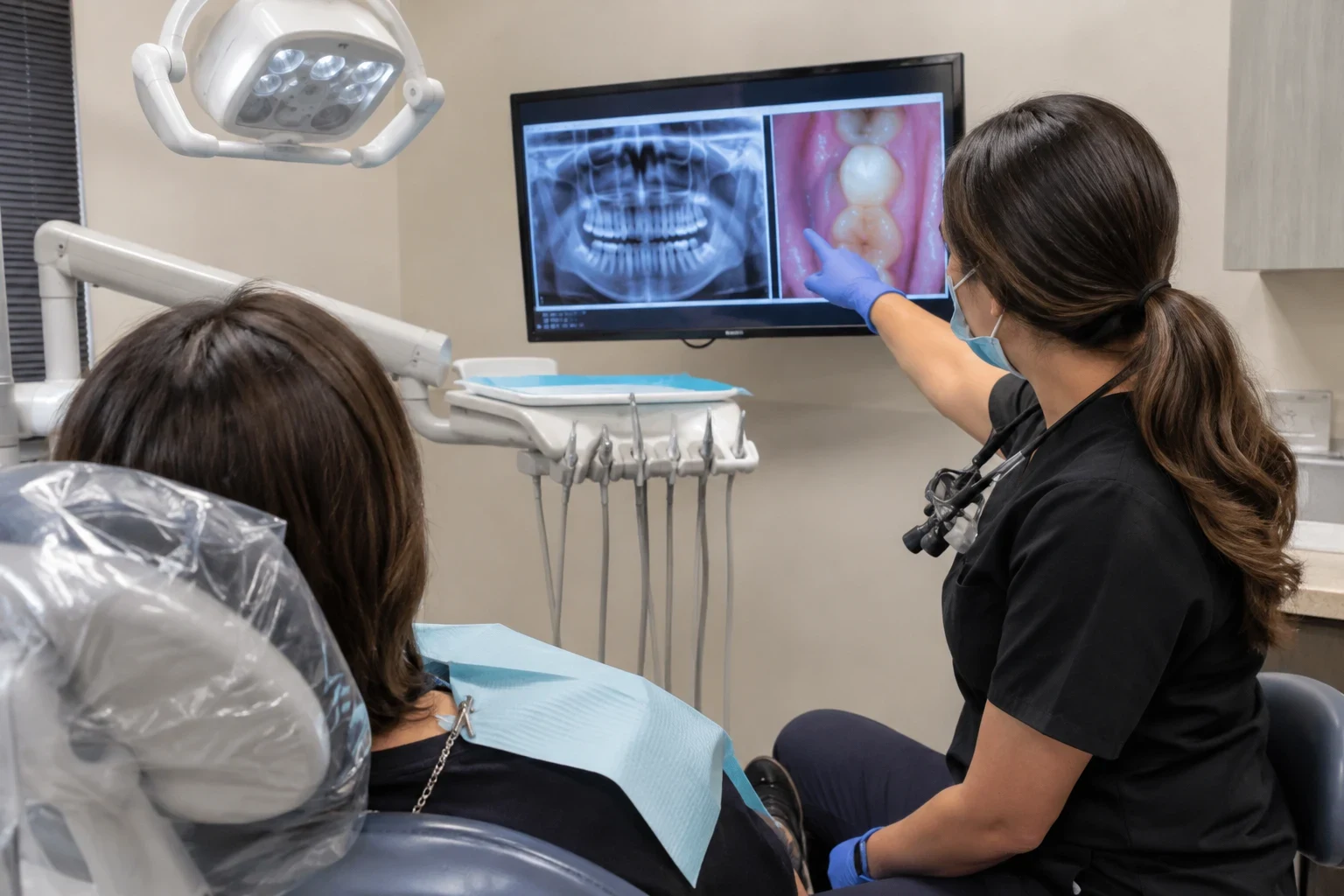
We examine your mouth, take X-rays and talk through full, partial and snap-in options. You leave with a written treatment plan and the cost laid out.
- 2
Extractions if needed
Teeth that can't be saved come out gently, with numbing so you stay comfortable. If you chose an immediate denture, it goes in that day.
- 3
Impressions and try-in
We take molds of your mouth and check a wax try-in. You see the shape and color of the teeth and tell us what to change before the final set is made.
- 4
Delivery and follow-up
We seat the denture, check your bite and show you how to put it in, take it out and clean it. Expect a few short visits for sore spots in the first weeks.
Denture questions we hear a lot
How long does it take to get dentures?
A conventional denture usually takes a few visits over several weeks, from impressions to try-in to delivery. If teeth need to come out, healing adds time. An immediate denture lets you wear teeth while you heal.
Will dentures hurt?
Sore spots are common in the first few weeks while your gums get used to the base. We adjust them quickly. Ongoing pain is not normal, so let us know.
Can I eat normally with dentures?
Most foods, yes, after some practice. Start soft and cut food small. Hard or sticky foods are tougher with a regular lower denture, which is a big reason people move to snap-in dentures on implants.
Should I get dentures or dental implants?
It depends on your bone, your health, your budget and how much stability you want. Regular dentures cost less and come faster. Implants hold better and help protect the jaw. We'll lay out both so you can compare.
Can you fix my old denture instead of making a new one?
Often, yes. A reline can tighten a loose fit and some cracks can be repaired. If the teeth are worn flat or the base is warped, a new one is usually the better spend.
Find out which denture fits you
Bring your questions and your current denture if you have one. We'll check your mouth and tell you plainly what your options cost.